

In public transportation, sound shows the way. Announcements, chimes, and signals guide passengers through the city, provide information, and help them find their way. We develop consistent sonic systems for buses, trains, and stations that provide orientation, make information easy to understand, and create a cohesive brand experience.
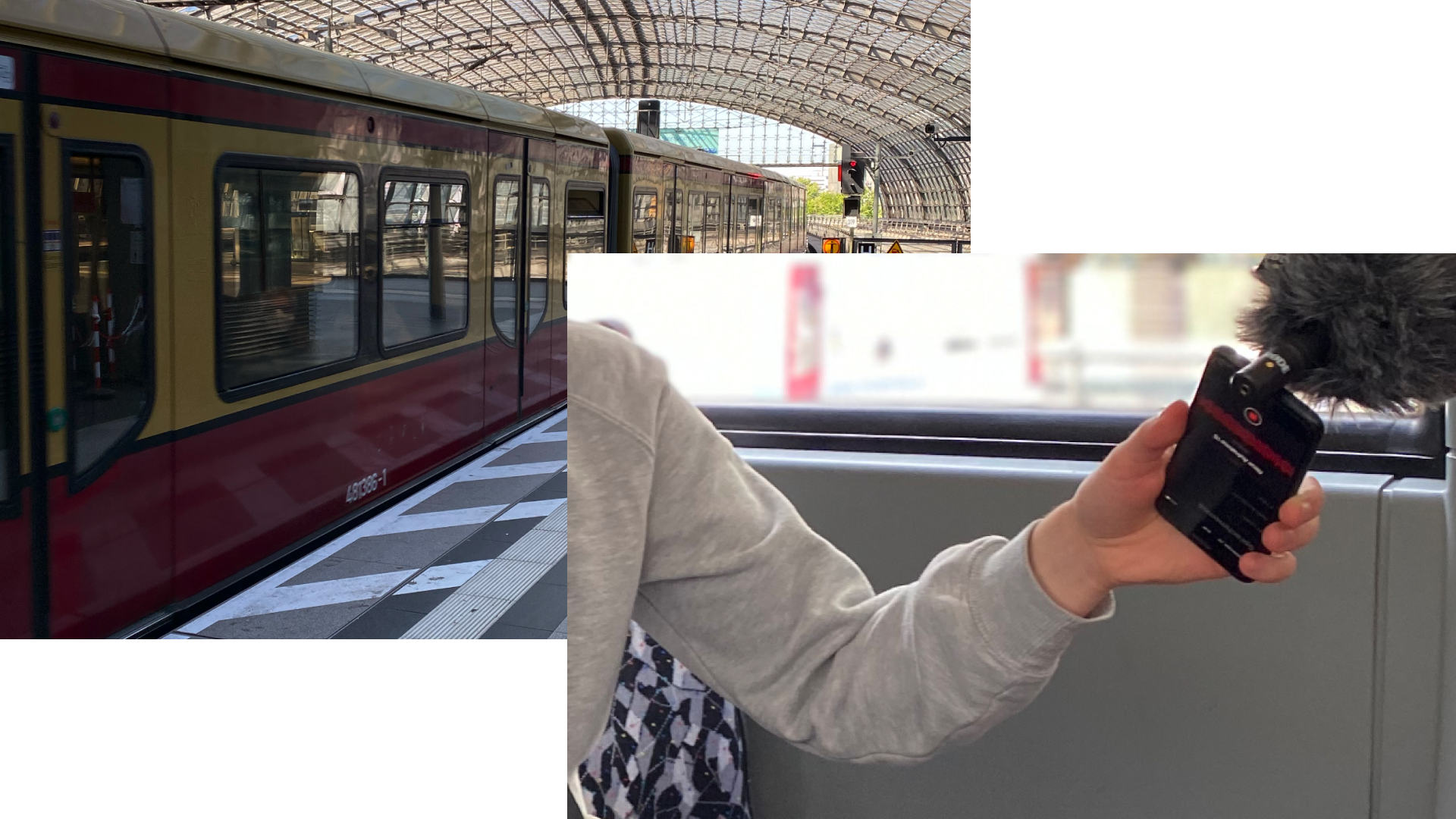
Sonic Branding for bus and rail combines UX Research, Brand Voices, and UI Sound Design. The goal: a consistent sonic passenger experience. Based on a clearly defined Audio DNA and real-world usage scenarios, we develop announcements, audio signals, and text-to-speech (TTS) solutions for vehicles and stations. Always tailored to passengers’ needs and the acoustic conditions on site.

Distinctive brand sound
Consistent experience across all routes
Quick and intuitive audio guidance
Information that comes through loud and clear
More accessible travel
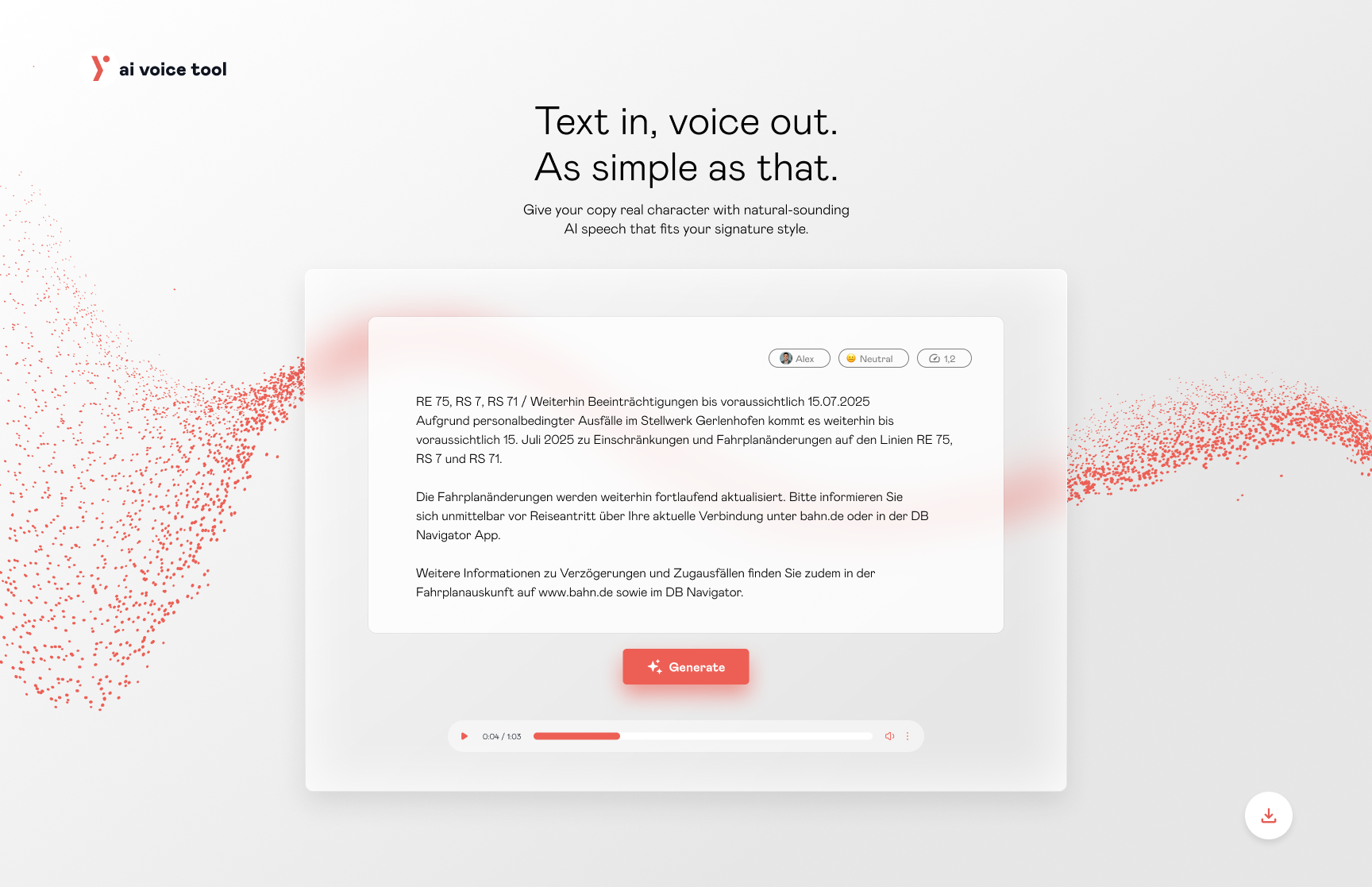

birds voice makes brand voices available anytime. For announcements at train stations, on buses, trams, trains, and much more. Consistent, multilingual, and ready to use.
Lorem ipsum dolor sit amet, consetetur sadipscing elitr, sed diam nonumy eirmod tempor invidunt ut labore et dolore magna aliquyam erat, sed diam voluptua.

With the people who will ultimately hear and use the UI Sounds. Through interviews and shadowing, we observe and accompany passengers and employees in real-world situations. We analyze what information they need, how they behave at different touchpoints, and where acoustic barriers might arise. At the same time, we define a clear Audio DNA in joint strategy workshops, establishing the brand’s overarching sonic principles.
Depending on the project, we develop information chimes, special announcement signals, door-location sounds, stop-request signals, feedback sounds for ticket machines, confirmation sounds for ticket scanners, and much more.
First, we define the specific requirements, voice character, and desired tone of voice. Based on these criteria, we cast suitable voice talents. Alternatively, we develop a custom AI voice or clone the voices of real speakers.
Yes. For AI-powered Brand Voices, we provide intuitive text-to-speech tools. These allow teams and content creators to generate new announcements in just a few clicks, anytime, around the clock, while ensuring they always remain on brand.
In everyday passenger journeys, audio signals and spoken announcements are often heard directly after one another. That’s why we develop both based on the same Audio DNA. This ensures that voice and sound complement each other, creating a cohesive sonic system and a consistent brand experience.
What sounds excellent in a recording studio can sound completely different on a moving bus. That’s why we work with the intended speaker systems during development. We test the final sounds on location for intelligibility, volume, and psychoacoustic impact.
A train station sounds different from the inside of a carriage. An elevator sounds different from a ticket machine. Each environment places its own demands on sound and speech. That’s why we carefully tailor frequency response, dynamics, and mixing to the specific speakers and real-world usage conditions.
Audio information can significantly improve orientation for people with disabilities. However, UI Sounds that are difficult to distinguish or announcements that are hard to understand can also create new barriers. That’s why we identify potential issues early through UX Research and address them when developing the final UI Sounds.


